

Face · Skin
Dermaplaning
Both locations
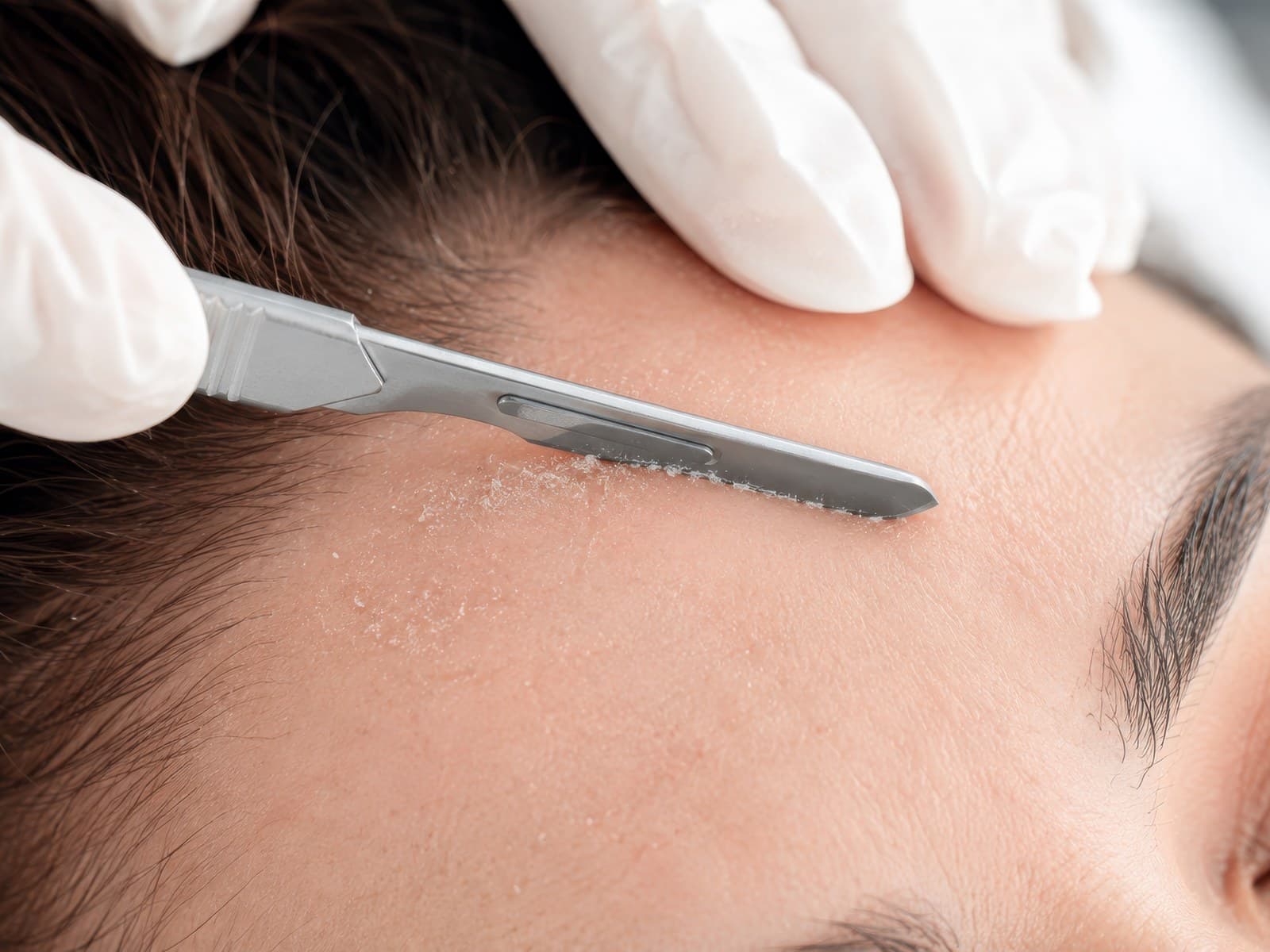
What does dermaplaning do, and does the hair grow back thicker?
Dermaplaning is a physical exfoliation treatment in which a sterile blade is drawn across the skin at an angle to remove dead surface cells and the fine vellus hair often called peach fuzz. It leaves the skin smoother, helps makeup sit more evenly, and has no downtime. The hair does not grow back thicker or darker — vellus hair returns with the same texture and colour it had before, because cutting a hair at the surface does not change the follicle that produced it.
Dermaplaning is a physical exfoliation treatment that removes dead surface skin cells and the fine vellus hair often called peach fuzz, using a sterile blade held at an angle against the skin.
How It Works
The treatment is manual rather than energy-based: no laser, no chemical, no heat. Your esthetician draws a sterile blade across the skin in short controlled strokes, taking off the outermost layer of dead cells along with the fine hair sitting in it. It is performed in a single appointment and is not painful.
Who It's For
Dermaplaning suits skin that looks dull or feels rough, and it is a frequent choice for people who find makeup sits unevenly or catches on fine facial hair. It is generally not appropriate over active acne, inflamed or broken skin, or during a flare of a skin condition — your esthetician assesses the skin first and will tell you if the timing is wrong.
What to Expect
Skin looks brighter and feels smoother immediately, and there is no downtime. It can look slightly pink for a short time afterwards and will be more sensitive to sun for a few days, so daily sunscreen matters more than usual in that window. The vellus hair returns at its original texture and colour — removing hair at the surface does not change the follicle underneath it.
Frequently Asked Questions
No. This is the most common worry about dermaplaning and it is a myth. Vellus hair grows back with the same texture and colour, because removing hair at the surface does not change the follicle it grows from.
No. Skin can look slightly pink immediately afterwards and is more sensitive to sun for a few days, so daily sunscreen matters more than usual in that window.
It is generally not suitable over active acne, inflamed or broken skin, or during an active flare of a skin condition. Your esthetician will assess your skin first and say so if the timing is wrong.
Often yes, and removing the dead surface layer first can help subsequent products absorb. Whether it should be combined on the day depends on your skin, so it is decided at the appointment.
It is usually spaced to allow the skin to complete its natural turnover cycle rather than done on demand. Your esthetician will recommend an interval for your skin.